Buy haushaltsaufloesungen.eu ?
We are moving the project
haushaltsaufloesungen.eu .
Are you interested in purchasing the domain
haushaltsaufloesungen.eu ?
domain@kv-gmbh.de · 0541-91531010
Buy haushaltsaufloesungen.eu ?
How does explosion protection work in screw conveyors?
Explosion protection in screw conveyors typically involves several measures to prevent the ignition of combustible materials and the propagation of explosions. These measures may include the use of explosion venting panels to release pressure in the event of an explosion, flame arrestors to prevent flames from traveling through the conveyor, and inerting systems to reduce the oxygen concentration in the conveying system. Additionally, the design and construction of the screw conveyor may incorporate features such as grounding and bonding to prevent static electricity buildup, and the use of non-sparking materials to minimize the risk of ignition. Overall, explosion protection in screw conveyors aims to minimize the potential for combustible materials to ignite and to mitigate the impact of any potential explosions. **
How can material blockage in screw conveyors be prevented? (See image)
Material blockage in screw conveyors can be prevented by implementing several measures. First, proper equipment design and selection is crucial to ensure that the screw conveyor is suitable for the specific material being handled. Additionally, regular maintenance and cleaning of the conveyor system is important to prevent build-up and blockages. Using appropriate screw designs, such as variable pitch or shaftless screws, can also help to prevent material blockage. Finally, monitoring the material flow and adjusting the conveyor speed or capacity as needed can help to prevent blockages from occurring. **
Similar search terms for Conveyors
Top-Angebote
Products related to Conveyors:
-
Whitehaus Collection Cyclonehaus Disposal ToolThe Whitehaus Collection Multi-Purpose garbage disposal tool safely pushes garbage and kitchen waste into your garbage disposal. This tool can be used as a Dish Scrapper to scrap all dishes clean.35,00 $*Shipping: 0,00 $Secure redirect to the provider



-
What is the difference between floor-mounted and floor-free continuous conveyors?
Floor-mounted continuous conveyors are fixed to the ground and require a solid foundation for installation, while floor-free continuous conveyors are suspended from the ceiling or walls, eliminating the need for a floor-mounted structure. Floor-mounted conveyors are typically more stable and can handle heavier loads, while floor-free conveyors offer more flexibility in terms of layout and can be easily reconfigured or relocated. Additionally, floor-free conveyors can help optimize floor space and improve accessibility for maintenance and cleaning purposes. **
-
What is the difference between floor-free and floor-bound continuous conveyors?
Floor-free continuous conveyors are elevated systems that do not require a floor-mounted track or support structure, allowing for greater flexibility in layout and space utilization. On the other hand, floor-bound continuous conveyors are fixed to the floor, limiting their mobility and layout options. Floor-free conveyors are often used in applications where space is limited or where a more dynamic layout is required, while floor-bound conveyors are typically used in more traditional, fixed layouts. **
-
What is the difference between aisle-free and aisle-bound continuous conveyors?
Aisle-free continuous conveyors are systems that do not require aisles for access, as they can transport items directly to their destination without the need for human intervention. On the other hand, aisle-bound continuous conveyors are systems that require aisles for access, as they transport items to a specific location where they need to be manually unloaded or loaded. **
-
Is it a coincidence that Wudu starts exactly at the 3 main conveyors?
No, it is not a coincidence that Wudu starts exactly at the 3 main conveyors. The timing of Wudu is strategically designed to align with the main conveyors in order to optimize the workflow and efficiency of the production process. By starting Wudu at the 3 main conveyors, the company can ensure that the cleaning process is integrated seamlessly into the overall production line, minimizing downtime and maximizing productivity. This deliberate synchronization helps to streamline operations and maintain a smooth and continuous workflow. **


How do you install a cleanout door on the chimney?
To install a cleanout door on a chimney, you will first need to locate the cleanout opening on the chimney. Next, measure the dimensions of the opening to ensure you purchase the correct size cleanout door. Remove any debris or obstructions from the opening before attaching the cleanout door using the provided screws or bolts. Make sure the door is securely in place and test its functionality before using the chimney. **
How can one declutter a house?
One can declutter a house by starting with one room at a time and sorting items into categories such as keep, donate, or throw away. It's important to be ruthless and only keep items that are truly necessary or bring joy. Utilizing storage solutions such as bins, shelves, and organizers can help keep items organized and out of sight. Regularly decluttering and maintaining a minimalist mindset can help prevent future clutter from accumulating. **
Top-Angebote
Products related to Conveyors:
-
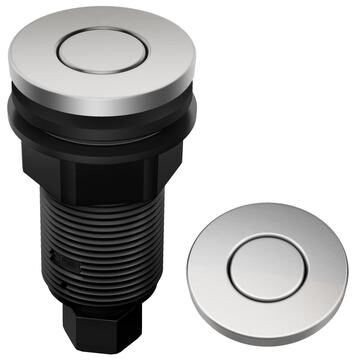
KRAUS Garbage Disposal Air SwitchThe KRAUS Garbage Disposal Air Switch Kit is a sleek and functional alternative to traditional wall-mount toggle switches, allowing you to activate your garbage disposal with the push of a button while creating a coordinated look with your kitchen...34,95 $*Shipping: 0,00 $Secure redirect to the provider
-
Whitehaus Collection Cyclonehaus Disposal ToolThe Whitehaus Collection Multi-Purpose garbage disposal tool safely pushes garbage and kitchen waste into your garbage disposal. This tool can be used as a Dish Scrapper to scrap all dishes clean.35,00 $*Shipping: 0,00 $Secure redirect to the provider
-
How does explosion protection work in screw conveyors?
Explosion protection in screw conveyors typically involves several measures to prevent the ignition of combustible materials and the propagation of explosions. These measures may include the use of explosion venting panels to release pressure in the event of an explosion, flame arrestors to prevent flames from traveling through the conveyor, and inerting systems to reduce the oxygen concentration in the conveying system. Additionally, the design and construction of the screw conveyor may incorporate features such as grounding and bonding to prevent static electricity buildup, and the use of non-sparking materials to minimize the risk of ignition. Overall, explosion protection in screw conveyors aims to minimize the potential for combustible materials to ignite and to mitigate the impact of any potential explosions. **
-
How can material blockage in screw conveyors be prevented? (See image)
Material blockage in screw conveyors can be prevented by implementing several measures. First, proper equipment design and selection is crucial to ensure that the screw conveyor is suitable for the specific material being handled. Additionally, regular maintenance and cleaning of the conveyor system is important to prevent build-up and blockages. Using appropriate screw designs, such as variable pitch or shaftless screws, can also help to prevent material blockage. Finally, monitoring the material flow and adjusting the conveyor speed or capacity as needed can help to prevent blockages from occurring. **
-
What is the difference between floor-mounted and floor-free continuous conveyors?
Floor-mounted continuous conveyors are fixed to the ground and require a solid foundation for installation, while floor-free continuous conveyors are suspended from the ceiling or walls, eliminating the need for a floor-mounted structure. Floor-mounted conveyors are typically more stable and can handle heavier loads, while floor-free conveyors offer more flexibility in terms of layout and can be easily reconfigured or relocated. Additionally, floor-free conveyors can help optimize floor space and improve accessibility for maintenance and cleaning purposes. **
-
What is the difference between floor-free and floor-bound continuous conveyors?
Floor-free continuous conveyors are elevated systems that do not require a floor-mounted track or support structure, allowing for greater flexibility in layout and space utilization. On the other hand, floor-bound continuous conveyors are fixed to the floor, limiting their mobility and layout options. Floor-free conveyors are often used in applications where space is limited or where a more dynamic layout is required, while floor-bound conveyors are typically used in more traditional, fixed layouts. **
Similar search terms for Conveyors
-
What is the difference between aisle-free and aisle-bound continuous conveyors?
Aisle-free continuous conveyors are systems that do not require aisles for access, as they can transport items directly to their destination without the need for human intervention. On the other hand, aisle-bound continuous conveyors are systems that require aisles for access, as they transport items to a specific location where they need to be manually unloaded or loaded. **
-
Is it a coincidence that Wudu starts exactly at the 3 main conveyors?
No, it is not a coincidence that Wudu starts exactly at the 3 main conveyors. The timing of Wudu is strategically designed to align with the main conveyors in order to optimize the workflow and efficiency of the production process. By starting Wudu at the 3 main conveyors, the company can ensure that the cleaning process is integrated seamlessly into the overall production line, minimizing downtime and maximizing productivity. This deliberate synchronization helps to streamline operations and maintain a smooth and continuous workflow. **
-
How do you install a cleanout door on the chimney?
To install a cleanout door on a chimney, you will first need to locate the cleanout opening on the chimney. Next, measure the dimensions of the opening to ensure you purchase the correct size cleanout door. Remove any debris or obstructions from the opening before attaching the cleanout door using the provided screws or bolts. Make sure the door is securely in place and test its functionality before using the chimney. **
-
How can one declutter a house?
One can declutter a house by starting with one room at a time and sorting items into categories such as keep, donate, or throw away. It's important to be ruthless and only keep items that are truly necessary or bring joy. Utilizing storage solutions such as bins, shelves, and organizers can help keep items organized and out of sight. Regularly decluttering and maintaining a minimalist mindset can help prevent future clutter from accumulating. **
* All prices are inclusive of VAT and, if applicable, plus shipping costs. The offer information is based on the details provided by the respective shop and is updated through automated processes. Real-time updates do not occur, so deviations can occur in individual cases. ** Note: Parts of this content were created by AI.